AI Receptionist for Recruitment Agencies: Never Miss a Candidate or Client Call
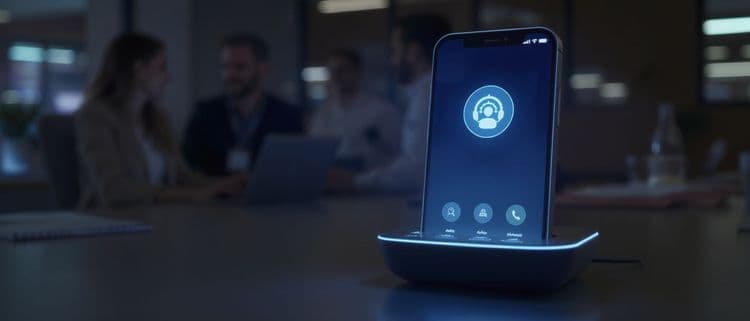
At 6:17 PM, your office phone rings. Your consultants are finishing interviews, the admin team has logged off and no one picks up. The caller could be a candidate ready to register, an employer with a new vacancy or an existing client who needs help. Without a useful response, they may simply call another agency.
An AI receptionist for recruitment agencies gives those callers an immediate first response. It can handle supported conversations and actions, capture the reason for the call and connect the outcome with your recruitment workflow, even when the team is busy or the office is closed.
What is an AI receptionist for recruitment agencies?
An AI receptionist is a voice assistant configured to answer inbound telephone calls using your agency's approved greeting, information and call-handling rules. Unlike a basic voicemail service, it can hold a natural conversation, ask relevant questions and decide the next step based on the caller's answers.
For a recruitment agency, that first step might mean collecting a candidate's contact details, capturing a new vacancy enquiry, answering an agreed question, taking a message or forwarding the caller to the appropriate person. The objective is not to replace the judgement of a recruiter. It is to make sure every suitable call receives a prompt, consistent response.
Why missed recruitment calls matter
Recruiters rarely spend the whole day waiting beside a telephone. They are interviewing candidates, visiting clients, working vacancies and managing compliance. At the same time, candidates and employers often call during lunch, between shifts or after normal office hours.
A missed call creates two problems. First, the agency may lose a time-sensitive opportunity. Second, the consultant has to return a call without knowing who called, why they called or how urgent the request is. An AI voice receptionist can capture that context at the beginning, giving the team a clearer and more useful follow-up task.
What can an AI recruitment receptionist handle?
The exact workflow is configured around the agency, its phone numbers and the actions it wants the receptionist to support. Typical uses include:
Candidate enquiries: collect a caller's name, contact details, work preferences, availability and reason for calling.
New client leads: capture the employer's organisation, vacancy requirement, urgency and preferred callback details.
Common questions: respond using information approved by the agency, then escalate when a question requires human judgement.
Interview or consultation requests: gather the information needed for the next step and support an agreed booking workflow where configured.
Call routing: forward supported calls to a person or team when a live conversation is appropriate.
After-hours cover: give callers a structured response when consultants are unavailable instead of relying only on an unqualified voicemail.
Call records: retain configured recordings and turn completed conversations into transcripts and AI summaries for follow-up.
Complex questions, sensitive decisions and recruitment advice should remain with the appropriate consultant. The receptionist's role is to collect context, complete supported actions and create a clean handover.
How candidate and client call workflows differ
Candidate calls
A candidate may be registering for work, asking about a vacancy, checking the next step in an application or trying to reach their consultant. The AI receptionist can identify the purpose of the call, collect the approved details and route or record the enquiry according to the agency's process.
New employer enquiries
When an employer calls with a vacancy, speed matters. A configured conversation can capture the company, role, location, start date, urgency and callback information. The consultant receives more than a missed-call notification: they receive useful context for the return call.
Known callers
With recruitment telephony connected to the CRM, an inbound number can help identify an existing record. Chameleon-i can use that information as part of the call route, including directing a caller to the online record owner where configured.
Out-of-hours calls
Working-hour schedules can change how a call is handled when the office is closed. Depending on the configured route, the caller can speak to the AI receptionist, leave a recorded message or follow another agreed path. The agency controls the greeting, routing behaviour and notification recipients.
How the AI receptionist connects with your recruitment CRM
A standalone answering service can take a message, but the consultant still has to transfer that information into the recruitment system. Chameleon-i brings telephony and recruitment data into the same working environment.
Where the call route and permissions allow it, the workflow can:
recognise a caller from an existing CRM telephone number;
associate call information with the relevant person;
make configured recordings available in call history;
produce a transcript and AI summary after a completed recording;
help the next recruiter understand what happened before following up.
This reduces the gap between answering a call and acting on it. The conversation becomes usable recruitment context rather than an isolated voicemail or handwritten note.
AI receptionist, voicemail or human answering service?
Each option has a place. Voicemail is useful when the only required action is to record a message. A human answering service may suit conversations that need broad discretion. An AI receptionist is particularly useful when the agency wants consistent, repeatable intake and routing around the clock.
Voicemail records what the caller chooses to say but cannot ask follow-up questions.
A human answering service can manage varied conversations but may operate outside the recruitment CRM and agreed desk workflow.
An AI receptionist follows configured questions and actions consistently, captures structured context and can form part of a CRM-connected telephone workflow.
Many agencies will use a combination. A known client may route directly to their consultant, an after-hours candidate may speak to the AI receptionist and an unanswered route may still fall back to voicemail.
Keeping recruiters in control
The strongest voice AI workflows have clear boundaries. Agencies should decide which calls the receptionist can handle, what information it may provide, when it should transfer a caller and what happens when the requested action is unsupported.
Recording, transcription, data access and retention should also be configured around the agency's operational and compliance requirements. Callers should receive any notices required for the chosen workflow, and access to recordings or summaries should be limited appropriately.
How to introduce an AI receptionist to your agency
Map your inbound calls. Identify the most common candidate and client reasons for calling, including busy periods and after-hours demand.
Choose the supported outcomes. Decide which calls should be answered, captured, routed, transferred or sent to voicemail.
Prepare approved information. Define greetings, questions, answers, escalation rules and the details consultants need in a handover.
Test and refine. Run realistic candidate and client scenarios before using the workflow more widely.
Chameleon-i Telephony is configured for each agency rather than appearing automatically in every account. The required users, numbers, routes, voicemail and recording setup are reviewed before availability and commercial terms are confirmed.
Frequently asked questions
Can an AI receptionist answer recruitment calls 24/7?
Yes. A configured AI receptionist can provide an immediate response outside normal office hours as well as during busy periods. The supported conversation and next action depend on the call route agreed for the agency.
Can it screen candidates?
It can collect approved information and ask configured intake questions. Decisions that require recruitment judgement, suitability assessment or sensitive advice should be passed to an appropriate recruiter.
Can it transfer calls to recruiters?
Supported calls can be forwarded to a person when appropriate. Chameleon-i Telephony also supports routes such as ring groups, sequential routing, CRM record-owner routing and forwarding to a configured external number.
Does it integrate with the Chameleon-i CRM?
Yes. Chameleon-i's telephone workspace can connect calls with recruitment records, call history, configured recordings, transcripts and AI summaries. The exact behaviour depends on the agency's configuration and permissions.
Can we keep our existing voicemail workflow?
Yes. Direct voicemail and no-answer fallback can remain part of the route. Agencies can configure greetings, recording length and notification recipients for supported telephone numbers.
Never leave an important recruitment call without a next step
The first conversation with a candidate or client should create momentum. An AI receptionist helps your agency respond consistently, collect useful context and give consultants a clearer next action without asking them to remain available every minute of the day.
Explore the Chameleon-i AI Voice Receptionist, review our recruitment telephony features or book a demonstration to discuss the call routes your agency needs.